
BCS at Dry-Off: Setting Cows Up for Success
Every dairy farmer knows the frustration of fresh cows that fail to peak, struggle to conceive, or lose excessive condition. Many of these problems start long before calving, during late lactation and at dry-off. The transition period is a costly stage where poor management increases metabolic disease, fertility problems, and production losses. Body Condition Score (BCS) is a key tool for managing this phase, reflecting the cow’s energy reserves

Ideally, cows should be dried off at a BCS of 3.0–3.5 (5-point scale) to maintain metabolic balance and support good production and fertility after calving.
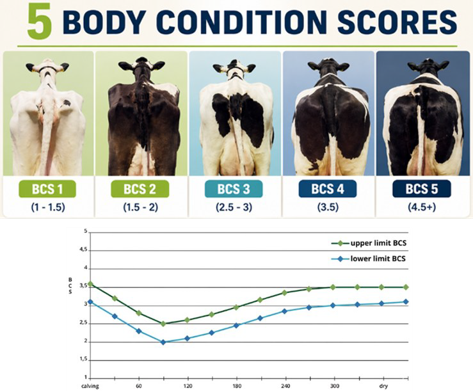
Figure 1. Ideal progression of condition during lactation.
The green line represents the upper limit. The blue line represents the lower limit.
Why BCS at Dry-Off Matters
BCS at dry-off strongly influences milk production, reproductive efficiency, metabolic health, hoof integrity, and overall farm profitability. Cows that calve outside the optimal condition range often carry these disadvantages throughout the next lactation, with each 0.5- to 1.0-BCS-unit deviation at calving potentially resulting in production losses, delayed conception, extended calving intervals, and increased replacement rates. Many of these losses are not immediately visible as disease but rather appear as reduced efficiency and profitability over time. The dry period should not be viewed as a resting phase but as a metabolic reset window where the rumen, liver, endocrine system, immune system, and mammary gland prepare for the demands of the next lactation. One of the strongest predictors of success is maintaining adequate dry matter intake (DMI), with well-managed cows typically consuming at least 11 to 12 kg of dry matter per day. If intake declines during the dry period, it often remains suppressed after calving, increasing the risk of negative energy balance, ketosis, fatty liver, reduced milk production, and poorer fertility. Water intake is equally important, as even mild restrictions can reduce feed intake, rumen function, and nutrient utilisation. Cows entering the dry period in poor condition also tend to have reduced immune responsiveness, increasing their susceptibility to diseases such as mastitis and metritis after calving. Hoof health further influences transition success, as lameness reduces feed access and intake, making preventative claw trimming during late lactation a valuable management practice before the metabolic demands of early lactation begin.
When Cows Become Too Fat or Too Thin
Over-conditioned cows
Over-conditioned cows at dry-off represent a high-risk metabolic group. These cows typically reduce feed intake 2 –3 weeks before calving, resulting in a severe energy shortage as calving approaches. To compensate, they begin drawing heavily on their body fat reserves to meet their energy needs. This places strain on the liver, weakens the immune system, and increases the risk of metabolic disorders such as ketosis and fatty liver. The resulting metabolic imbalance can also increase the incidence of milk fever, retained placenta, and reduced fertility, often leading to delayed rebreeding and poorer overall performance during the next lactation. A further hidden cost is reduced immune resilience, which increases susceptibility to mastitis and uterine infections during early lactation.
Under-conditioned cows
Under-conditioned cows face the opposite challenge. With insufficient energy reserves, they are unable to support peak lactation demands and often fail to express their full genetic potential. This commonly results in delayed ovarian cyclicity, poor conception rates, extended days open, and increased disease susceptibility. Low Body Condition Score (BCS) delays ovulation and impairs follicular development. Importantly, the follicles responsible for early conception are formed 60–80 days before ovulation, meaning metabolic stress during this period directly compromises future fertility outcomes. After calving, restoring body condition is inefficient because most dietary energy is used for milk production rather than for rebuilding body reserves.
Optimising Cow Condition Before Dry-Off
Effective transition management starts in late lactation, when BCS can still be corrected before dry-off. Thin cows should regain condition gradually, while over-conditioned cows must be prevented from gaining further fat.
In the final 10–14 days before dry-off, concentrate should be reduced and roughage increased to stabilize the rumen and lower milk yield.
Grouping is critical. A single-group system leads to inconsistent conditions at dry-off. Thin cows need higher-quality, energy-dense forage, while over-conditioned cows require controlled-energy, high-fibre diets.
How De Heus Technical Advisors Add Value
Successful transition management requires consistent monitoring and timely intervention.
Technical Advisors support farmers by:
• Monitoring and targeting optimal dry-off BCS (3.0–3.5)
• Identifying thin and over-conditioned cows early
• Grouping cows by condition and production stage
• Adjusting rations using feed efficiency (FE)
• Supporting DCAB strategies to reduce milk fever risk
• Implementing transition programs like our Prelacto Concept
• Monitoring locomotion and Hoof health
• Improving DMI and rumen adaptation during transition
The objective is consistent: healthier cows that calve smoothly, peak efficiently, conceive earlier, and remain productive for longer.
Conclusion
BCS at dry-off remains one of the strongest predictors of dairy cow performance. Cows dried off within the optimal range (BCS 3.0–3.5) enter the next lactation with a clear metabolic advantage, while cows outside this range carry forward inefficiencies that reduce milk yield, fertility, and profitability. Ultimately, transition success is not determined after calving; it is built during late lactation and the dry period. Managing BCS correctly is one of the most cost-effective and practical interventions available to improve herd performance and lifetime productivity. For tailored nutritional and management support, reach out to a De Heus technical advisor.
To find out more about setting cows up for success, contact your local De Heus Technical Advisor - https:// www.deheus.co.za/meet-our-team/.


