
Beat The Heat Before Calving: Protecting Colostrum, Calves, And The Future Herd
In many South African dairies, heat stress is often seen as primarily a lactation challenge. When temperatures rise above 30°C, and the humidity remains high, milk yield drops, feed intake declines and conception rates suffer. But if we genuinely want to beat the heat, we must look earlier than the bulk tank. The actual cost of summer often begins quietly in the dry period, weeks before calving, where the heat load shapes colostrum quality, calf immunity and the

When the De Heus Heat Stress Index exceeds 68, cows begin to experience measurable heat stress. This index combines ambient temperature and relative humidity into a single value that reflects how effectively a cow can dissipate heat under real farm conditions, making it far more informative than temperature alone. In practice, producers can monitor these conditions using tools such as the De Heus CoolCare app, which translates local weather data into real-time HSI values and easy-to-interpret risk categories. Once the index rises above 72, the impact becomes more pronounced. As shown in Graph 1, average summer conditions in South Africa regularly exceed these thresholds, placing dry cows under sustained heat load during late gestation, precisely when mammary development and immune preparation for colostrum formation are most critical.
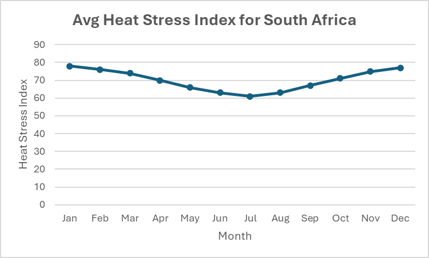
Graph 1: Average Heat Stress Index for SA (Source South African Weather Service)
Evidence from multiple studies confirms that when the De Heus Heat Stress Index exceeds 72 during late gestation, colostrum production declines measurably, with reductions of up to 12 percent and total volume losses of 20 to 30 percent under sustained heat stress conditions.
These losses matter because colostrum value depends on both quality and quantity. Good quality colostrum should contain at least 50 g/L of IgG, corresponding to a Brix reading of 22 percent or higher. The goal is to deliver 150 to 200 grams of IgG to the calf within the first two hours of life. Heat stress during the final weeks before calving compromises mammary development. Hormonal processes preparing the udder for immune transfer compete with the cow’s need to regulate body temperature. Energy and nutrients are redirected toward cooling rather than colostrum formation. Even when IgG concentration appears adequate, reduced volume means fewer total grams of immunoglobulin reach the newborn calf.
As illustrated in Graph 2, increasing heat load is associated with declining colostrum Brix values. This inverse relationship highlights how rising heat stress during late gestation can directly reduce passive immunity potential.
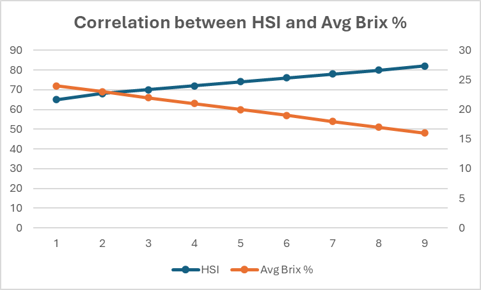
Graph 2: Correlation between HSI and average Brix % (Source Güven & Kara (2024))
The challenge continues on the calf side. Calves born to heat-stressed dams often absorb immunoglobulins less efficiently. Under well-cooled conditions, calves commonly achieve serum IgG levels of 25 to 30 mg/mL within 24 to 48 hours after feeding. When dams experience significant late gestation heat stress, these levels are typically 10 to 15 percent lower, even when similar quality colostrum is provided. Failure of passive transfer, defined as serum IgG below 10 mg/mL, can affect 20 to 25 percent of calves during high index periods, compared with less than 10 percent in cooler seasons.
In South African systems, calves already face environmental pressures such as dust, fluctuating temperatures and pathogen load in group housing. Reduced passive transfer has immediate consequences. Calves with inadequate immunity are two to three times more likely to develop diarrhoea or pneumonia during the first 60 days. Morbidity rates of 30 to 40 percent have been observed in calves born during heat stress periods compared with 15 to 20 percent in cooler months, translating into higher treatment costs, slower growth, and a less resilient replacement pool.
Hot temperatures also accelerate bacterial growth in colostrum. If it is not collected promptly and cooled immediately, bacterial counts can exceed 100,000 CFU/mL. At this level, IgG absorption can decline by 15 to 20 percent. Even high-quality colostrum can lose value if hygiene and cooling protocols are not carefully maintained during summer.
The long-term implications extend well beyond the calf stage. Heifers that begin life with compromised immune status tend to grow more slowly and often calve later. Many studies report a 5 to 8 percent lower milk yield in the first lactation. Evidence also suggests that daughters of heat-stressed dams may experience reduced mammary development, affecting lifetime productivity. For herds investing heavily in genetics and replacements, these losses are preventable.
Dry cow cooling deserves the same priority as lactating cow cooling. When the De Heus Heat Stress Index approaches 68, and especially once it exceeds 72, intervention becomes essential. Effective shade, adequate airflow, strategic use of fans and sprinklers, and constant access to clean water are practical tools to beat the heat, protect immune transfer, and safeguard future production.
During heat stress, dry matter intake can decline by 10 to 20 percent, compromising metabolic balance and udder preparation. Careful feeding management and consistent water availability are critical components of any dry-period heat mitigation strategy.
Colostrum management must also be tightened during hot months. Testing with a Brix refractometer, collecting colostrum immediately after calving, rapid cooling and strict hygiene are essential when bacterial pressure rises. Feeding adequate volume within the first two hours remains non-negotiable. Monitoring calf serum total protein or Brix values during summer confirms that passive transfer targets are consistently achieved.
To beat the heat is not just about protecting the current milk yield. It is about protecting the dry cow, safeguarding colostrum quality and giving the calf the strongest start possible. By proactively managing heat stress before calving, producers can improve immune transfer, reduce disease risks and strengthen the performance in the next lactation. In a climate where high heat load conditions are increasingly common, effectively beating the heat may be the difference between calves that merely survive the summer and those that grow into productive cows that secure the future of the herd and the dairy.
Beat the heat before calving by protecting colostrum quality, safeguarding calves, and securing the future herd—work together with your local De Heus Technical Advisor to keep your cows healthy and productive: https:// www.deheus.co.za/meet-our-team/


