Common Mistakes in Pullet Rearing
The entry of new point of lay producers with limited experience has resulted in widespread production of incorrectly reared pullets. These deficiencies manifest across four critical management areas:
Nutrition: Inadequate understanding of phase feeding requirements and failure to achieve target body weights at key developmental stages.
Vaccination Scheduling: Improper timing of vaccinations, inadequate disease challenge programs, and failure to establish proper immune competence before transfer to laying facilities.
Management During Rear: Poor uniformity control, inadequate feeder and drinker space, and insufficient monitoring of flock development.
Incorrect Lighting Programs: Perhaps the most critical and frequently mismanaged aspect, failure to properly control photoperiod during the rearing phase.
These mistakes collectively result in layers that face numerous challenges during the laying period, including poor peak production, inadequate laying, reduced shell quality, and increased mortality due to prolapses and disease challenges from missed vaccinations.
Environmental management: Improper house temperature and humidity for age and the ventilation.
Why Lighting Programs Matter
Lighting is one of the most powerful environmental factors influencing sexual maturity in laying hens. The lighting program controls the onset of lay and significantly affects performance throughout the production cycle. As stated in the Lohmann Brown management guide, Field results indicate that avoiding an early light increase at 14 or 15 weeks allows the bird to physically develop further before the onset of lay. This can result in better production persistence and better shell quality in the later stages of lay.
The fundamental principles that must guide any lighting program are:
• Never increase hours of light during the rearing period before 1.4 -1.5 kg BW is achieved.
• Never decrease hours of light during the production period
• Always account for natural daylight in open or brown-out houses
Working with Natural Day Length
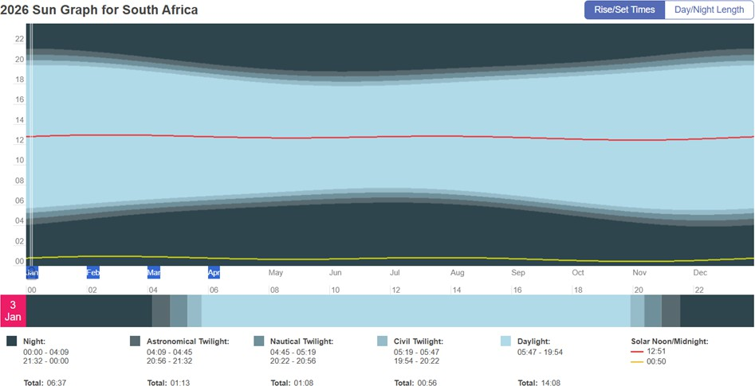
South Africa presents unique challenges and opportunities for pullet rearing in open-sided houses. The natural day length varies significantly by season and geographic location. In South Africa, the longest day of the year provides approximately 14 to 15 hours of daylight, depending on whether the operation is situated in the northern or southern parts of the country.
Figure 1: South African natural light day lengths (extracted from https://www.timeanddate.com)
For open-sided houses that cannot be completely darkened, the lighting program must be synchronised with the natural day length during placement and at transfer to the layer house. In open-type rearing houses, the lighting programme must take into consideration the seasonal change in natural day length and be set up in such a manner that the total light never increases during the rearing period.
When to Rear Pullets in South Africa
The optimal timing for rearing pullets in open-sided houses depends on synchronizing the flock's age with seasonal day length patterns. The goal is to prevent early light stimulation while ensuring the birds reach physiological maturity (typically 16-18 weeks) when natural day length is either stable or decreasing, allowing for controlled artificial stimulation.
Autumn-Hatched Pullets (March-April Placement)
Pullets placed in autumn present significant advantages for open-sided rearing in South Africa. As these birds progress through the rearing phase (weeks 0-17), natural day length decreases from approximately 12 hours toward the winter minimum of about 10 hours. This natural decline supports the step-down lighting program without risk of premature stimulation.
Advantages:
• Natural day length decreases during the critical 8–17-week period.
• Easy to maintain a constant or declining photoperiod using artificial lighting.
• Birds reach maturity (16-18 weeks) during shorter days, allowing controlled stimulation by artificial lighting.
• Transfer to laying houses can coincide with increasing spring day length.
The table shows that the recommended program generated from the Hyline lighting program for open rearing to open lay houses.
|
Weeks of Age
|
Date
|
Sunrise
|
Lights on
|
Lights Off
|
Sunset
|
Total
Hours of Light
|
Total Sunlight
|
|
|
|
|
|
0:00
|
|
|
|
|
0
|
1-Mar
|
5:57
|
0:45
|
22:45
|
18:31
|
22:00
|
12:34
|
|
1
|
8-Mar
|
6:00
|
1:45
|
22:00
|
18:24
|
20:15
|
12:24
|
|
2
|
15-Mar
|
6:03
|
2:30
|
21:15
|
18:18
|
18:45
|
12:15
|
|
3
|
22-Mar
|
6:06
|
3:15
|
20:30
|
18:11
|
17:15
|
12:05
|
|
4
|
29-Mar
|
6:09
|
4:00
|
19:45
|
18:04
|
15:45
|
11:55
|
|
5
|
5-Apr
|
6:12
|
4:45
|
19:15
|
17:57
|
14:30
|
11:45
|
|
6
|
12-Apr
|
6:14
|
5:30
|
18:45
|
17:50
|
13:15
|
11:36
|
|
7
|
19-Apr
|
6:17
|
5:45
|
17:45
|
17:44
|
12:00
|
11:27
|
|
8
|
26-Apr
|
6:20
|
5:45
|
17:45
|
17:39
|
12:00
|
11:19
|
|
9
|
3-May
|
6:23
|
5:45
|
17:45
|
17:34
|
12:00
|
11:11
|
|
10
|
10-May
|
6:27
|
5:45
|
17:45
|
17:29
|
12:00
|
11:02
|
|
11
|
17-May
|
6:30
|
5:45
|
17:45
|
17:26
|
12:00
|
10:56
|
|
12
|
24-May
|
6:33
|
5:45
|
17:45
|
17:24
|
12:00
|
10:51
|
|
13
|
31-May
|
6:36
|
5:45
|
17:45
|
17:22
|
12:00
|
10:46
|
|
14
|
7-Jun
|
6:39
|
5:45
|
17:45
|
17:22
|
12:00
|
10:43
|
|
15
|
14-Jun
|
6:42
|
5:45
|
17:45
|
17:22
|
12:00
|
10:40
|
|
16
|
21-Jun
|
6:44
|
5:15
|
18:15
|
17:23
|
13:00
|
10:39
|
|
17
|
28-Jun
|
6:45
|
5:00
|
18:30
|
17:25
|
13:30
|
10:40
|
|
18
|
5-Jul
|
6:45
|
4:45
|
18:45
|
17:28
|
14:00
|
10:43
|
Table 1: Lighting program for open rearing houses for South Africa (Hyline lighting program)
Increase lighting with 30 minutes weekly until reaching 16 hours of total lighting.
Pullets placed from 01 March stand the best chance to benefit from the changing natural day length and can be easily supplemented with artificial lighting to reach the desired total photoperiod.
Winter-hatched pullets face the challenge of rearing during the shortest days but reaching maturity as days lengthen significantly. This requires careful management to prevent natural spring day length from stimulating early maturity. It is recommended that winter rearing be undertaken in dark houses that are light-tight to control lighting. However, should there be a need to rear during this period, it is important to consider the following management strategies.
Management Strategy for winter to spring rearing in open-sided houses.
• Maintain artificial lighting at constant duration (10-11 hours) from week 8 through week 16, regardless of increasing natural day length
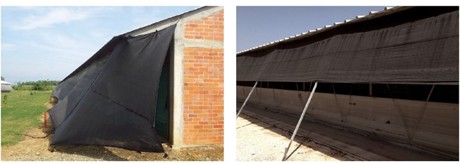
• Use black shades or curtains to block early morning and late evening natural light
• Begin artificial stimulation at 17-18 weeks before natural day length exceeds 12 hours
• Ensure light intensity in laying house exceeds rearing house (20-30 lux vs. 5-10 lux)
Figure 2: Use of shading cloth to reduce natural light intensity in rearing houses (Picture from Hyline Management guide)
Spring placements are generally not recommended for inexperienced farmers using open-sided houses. These birds encounter increasing day length during the critical 12-17 week period, making it extremely difficult to prevent early sexual maturity without sophisticated light-proofing.
When moving pullets to open laying houses:
• Never increase day length by more than 2-3 hours at transfer.
• Maintain lights on time, consistent with the rearing farm initially.
• Gradually adjust to laying house schedule over 1-2 weeks.
• Ensure laying house light intensity (20-30 lux warm light) exceeds the rearing house.
Pullets reared with correctly timed lighting programs that avoid early stimulation demonstrate:
• Better persistence of lay (maintaining production above 80% for longer periods).
• Improved shell quality throughout the laying cycle.
• Reduced incidence of double-yolked and oversized eggs.
• Lower mortality during peak production from prolapses.
• More uniform flock performance.
Research confirms that pullets reared under controlled short-day conditions and properly stimulated produce significantly more eggs than those exposed to increasing natural day length during the rearing phase.
Conclusion
The Avian Influenza crisis reshaped South Africa’s egg industry, highlighting both opportunity and risk. While pullet rearing has become more attractive and convenient for smaller to medium farms, success in open-sided systems depends on disciplined lighting and environmental management. Aligning placements with natural day length and adhering to established rearing principles ensures proper development, optimal onset of lay, and sustained production. Ultimately, farmers who manage light correctly will convert a challenging environment into a consistent and profitable advantage.