
How Infrastructure and Management Boost Feedlot Profitability
Starting a sheep feedlot is about more than just putting lambs in a pen and feeding them. The layout of the feedlot makes a big difference in how well the animals grow and how easy it is to manage. A good slope and drainage keep the pens dry, while the right aspect and shade help sheep handle heat and cold better.

The practical side is just as important. Strong fences and good security stop losses and keep predators out. Well-designed feeding troughs and a proper feed mixing setup mean less waste and more consistent feeding. Even something like an office plays a role, as it’s where you keep records, plan rations, and manage staff. Put all these pieces together, and you’ve got the backbone of a feedlot that runs smoothly and grows profitably.
Figure 1 is an example of a well-designed feedlot. The shade and water are away from the feed bunks, and they are also under cover to prevent the weather from spoiling the feed. The feeding system is automatic, which reduces the labour factor on the feedlot, but reduces flexibility in ration changes and changes in individual pen feed allocations. The slope and aspect of this lot are good; however, the abnormally high rainfall in the year the picture was taken is misleading.
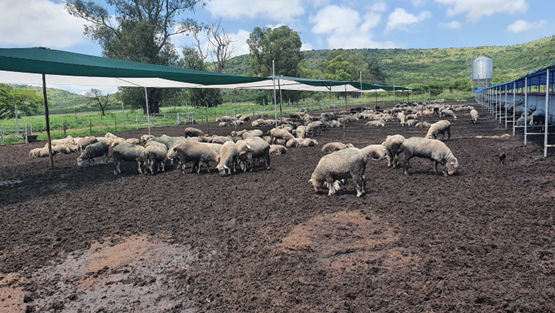
Figure 1: A well-designed feedlot
Here are two conventional feedlots in the Free State (Figure 2) showing a simple design. One opting for self-feeders and the other for manual conveyor belt feed bunks. Manual feeding and increased feeding frequency reduce feed wastage and increase intakes, but at a higher labour cost.
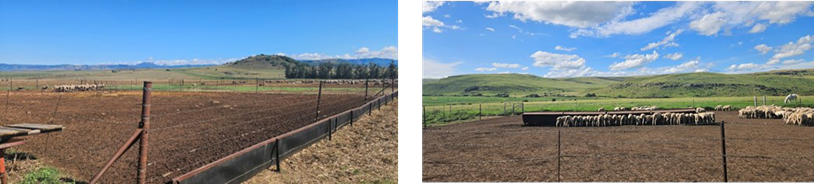
Figure 2: Conventional feedlots
Manual Management: Daily chores to increase profitability:
Daily management is where the profit of a feedlot is made or lost. Simple chores like checking water and feed, walking through the pens to spot sick or slow-eating lambs, and cleaning troughs will lead to better growth and fewer losses. Consistency in feeding times, keeping accurate records, and training staff to handle sheep calmly also make a big difference. In the sections that follow, we’ll look at these daily routines in more detail and show how they can turn a well-built feedlot into a profitable one.
Bunk Scoring
Bunk scoring is one of the most valuable daily habits in a feedlot. Every morning, the manager rates the feed leftovers in the troughs on a simple 0–4 scale, which tells you exactly how much feed the sheep ate overnight. The goal is to fine-tune feeding so there’s just a small trace of feed left by the next feeding. Too much leftover means money wasted and feed heating up in the troughs, while too little or an empty trough for hours means sheep are being underfed, and the risk of acidosis goes up when the next feed arrives. By scoring bunks consistently, managers can quickly adjust the next day’s ration to match intake, reducing waste and improving animal performance.
Good infrastructure makes bunk scoring much easier and more reliable. Clear, uniform troughs help staff see exactly how much feed remains. A well-designed system makes it simple to read bunks quickly and accurately across the whole feedlot. The result of bunk scoring is tighter feed control, less waste, and a more stable rumen environment for the sheep. Over time, this translates directly into better feed efficiency, healthier animals, and higher profitability.
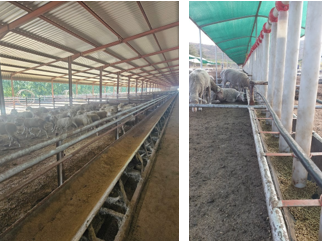
Figure 3 & 4: Automatic feeding systems
Apart from the initial cost, Automatic feeding systems are great. However, remember to take into account the changing of rations and clearing of old feed. The system (Figure 3) has a running conveyor belt which can clear all fines every day and feed different rations to different pens. The Auger system is restricted to feeding each pen the same ration and amount of feed, and it has to be cleaned out by hand.
The feedlot (Figure 5) has a good feed bunk design, manual feeding by feed car or hand can be done, allowing finer adjustments per pen, lower startup cost and more consistent. The roof could be lower as weather persists through the sides, and the feed bunks could be open-ended to assist in the removal of fines.
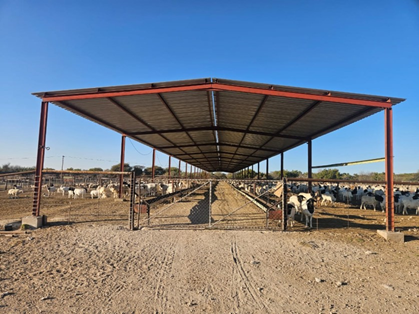
Figure 5: A good feed bunk design
Dung Scoring
Dung scoring is one of the simplest and most effective tools a feedlot manager can use to keep lambs healthy and profitable. By looking at the consistency and shape of dung, we get a clear picture of how well animals are digesting their feed.
Regular dung checks are also one of the earliest ways to pick up rumen problems like acidosis. Soft, foamy, or sour-smelling dung can be a warning sign that the rumen environment is under pressure. Catching this early allows the manager to slow down, concentrate on build-up, adjust roughage levels, or add buffers before serious losses occur. Because acidosis reduces feed conversion and can kill lambs, dung scoring becomes a direct line of defence to protect both animal health and profit.
Dung also tells us a lot about how consistently the feedlot system is running. If dung scores are steady across pens, it usually means feed mixing and delivery are being done properly. But when some groups show loose dung and others don’t, it can point to uneven mixing, sorting at the trough, or irregular feeding times. In this way, dung is not just feedback from the sheep, but also a reflection of how well the management team is sticking to routine. In the feedlot, it is important to have a dung consistency of a soft serve ice cream for optimal feed fermentation.
Lastly, dung scoring can even help with broader animal health. Worm burdens or other parasites often cause loose or green dung, even if the ration hasn’t changed. Linking dung observations with growth performance and health records gives managers a fuller picture, helping them time deworming and treatments more accurately. In short, dung scoring is a low-cost but powerful daily habit that guides ration adjustments, prevents health issues, and keeps the feedlot running profitably. Abattoir visits provide insights such as rumen damage and parasite infections like wireworm and tapeworm.
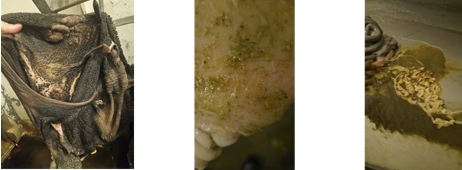
Figure 7: Abattoir visits reveal rumen damage and parasite infections (e.g., wireworm, tapeworm).
Water trough Scoring
Water is the cheapest feed ingredient in a feedlot, but also the most overlooked. Scoring water troughs daily is just as important as scoring dung, because clean, cool water drives feed intake and ultimately growth. When sheep have access to enough good-quality water, they eat more, digest better, and convert feed more efficiently. Even a small slip in water supply, whether from dirty troughs, low flow, or hot water, quickly shows up as reduced intake and weaker growth. That makes water trough scoring a key part of daily management.
Daily checks should focus on a few basics. Cleanliness is the first; mud, manure, or leftover feed in the trough not only puts sheep off drinking but also grows bacteria. Flow rate is another critical point; sheep should never be waiting for water, so a quick check ensures pipes and ball valves are working properly. Water temperature also matters: in hot weather, shaded troughs help keep water cool and encourage higher intake. Algae and mud contamination are common issues in feedlots, especially where water stands for too long, so managers must keep troughs scrubbed and flushed regularly.
The right infrastructure makes this job easier. Troughs with drain valves allow quick flushing and cleaning, shaded water points protect from heat stress, and water meters on the mainlines help track usage and quickly flag leaks or supply problems.
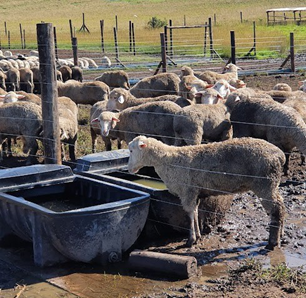
Figure 8: Sheep reaching through fence for cleaner water
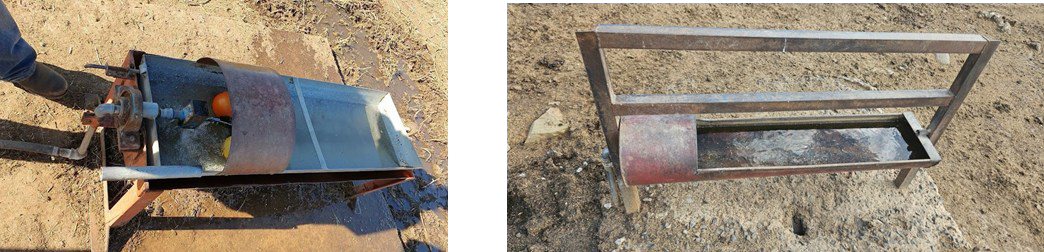
Figure 9: Two types of swivel “tip-krips” for easy cleaning
Mortalities
Every death in a feedlot costs money, so keeping track of mortalities is a key management responsibility. A simple log recording the pen, date, weight, and cause (if known) helps managers spot patterns before they become a bigger problem. For example, repeated deaths in one pen may indicate a feed, water, or health issue that needs urgent attention. By reviewing mortality records regularly, managers can make adjustments to rations, health protocols, or pen conditions to prevent repeat losses.
Infrastructure makes managing mortalities much easier and safer. Sick pens located near the handling area allow quick attention to unwell animals, while isolation pens for incoming or treated sheep reduce the risk of spreading disease.
When mortalities are tracked carefully and supported by proper infrastructure, managers can turn each loss into a lesson, reduce future deaths, and protect both animal welfare and feedlot profitability.
Performance Data Management
Performance data is the steering wheel of a feedlot. Without it, you’re driving blind. Recording and managing growth data, feed use, and health events gives a clear picture of how well the feedlot is running and where money is being made or lost. A weighing crate with a reliable scale, linked to a tag system—whether visual tags or EID—forms the backbone of this system. Even simple tools like a laptop or tablet with basic spreadsheets are enough to keep track of average daily gain (ADG), feed conversion ratios, mortalities, treatments, and differences between pens. With this information on hand, managers can make quick, informed decisions instead of relying on guesswork, which nearly always costs profit.
Feed usage is another part of the picture that ties directly into performance. Accurate records of how much feed is mixed, delivered, and consumed help pick up wastage and highlight where rations may need tweaking. By comparing feed usage against growth data, managers can see which pens are performing best and why, and then apply those lessons across the feedlot. The combination of good infrastructure and disciplined record-keeping turns data into one of the most powerful management tools, ensuring every kilogram of feed is converted into as much growth as possible
In conclusion, Industry partners like animal health specialists and feed suppliers, such as De Heus, play a big role in keeping a feedlot profitable. Regular abattoir visits help managers see how lambs are performing on feed, while rumen and organ scoring give insight into digestion and overall health. Experts can also assist with parasite monitoring and control, ensuring lambs stay healthy and grow efficiently. By using these services, feedlot managers get practical advice and support to make smarter decisions and protect both animal welfare and profit.
For more information reach out to our technical advisors: https://www.deheus.co.za/meet-our-team/.


