
Milk Flocculation
Milk stability is a critical yet often overlooked factor in dairy production, particularly in systems supplying milk for UHT processing. While milk may appear normal under standard conditions, subtle imbalances in pH, mineral composition, diet, and environmental stress can compromise protein stability and lead to flocculation or alcohol instability. These challenges are increasingly observed in pasture-based systems where high potassium levels, rapid dietary transitions, and heat stress disrupt calcium metabolism and casein micelle integrity.

Understanding the nutritional, physiological, and environmental drivers behind unstable non-acid milk is essential for maintaining processing quality, protecting herd health, and ensuring optimal milk performance from farm to factory.
Bodybuilders often make milk flocculate on purpose:
Although casein is not the only component responsible for milk’s white appearance, it is the primary protein in milk and an excellent source of high-quality protein. Bodybuilders decrease the milk pH on purpose, thereby making the milk less stable. They do this by slowly adding distilled white vinegar until the pH drops to the point where it starts to flocculate, which is when the casein separates from the rest of the milk. This looks something like snowflakes floating in the solution. It is then poured through a cloth to separate the casein protein from the rest of the solution, slowly drying the casein protein in the oven, and then using it to make their protein drink.
What is there to learn from them?
The lower the pH, the less stable is milk. It would not usually be a problem in the processing of milk, but with UHT processing, milk is increased to high temperatures and then decreased to low temperatures at a super high speed. Therefore, with UHT processing, any milk instability will be exposed.
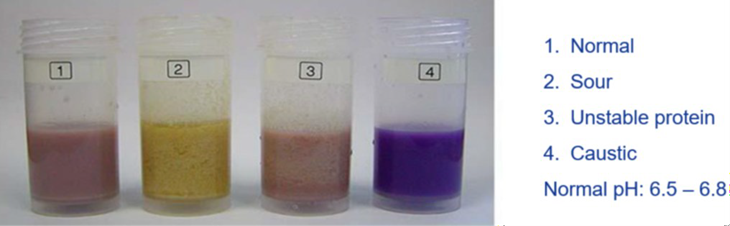
Illustration 1: Alizarol (75%) stability test of milk on the farm
Milk flocculation is primarily caused by calcium instability, often resulting from excessive potassium levels in pasture systems that lower milk pH. This issue is compounded by rumen pH fluctuations due to sudden dietary changes, as well as environmental stressors like high temperatures and humidity. Calcium metabolism is heavily influenced by the balance of magnesium and potassium, with imbalances forcing the body to draw calcium from bone reserves, particularly in older cows. The staggers index (which reflects the potassium, calcium, and magnesium balance) is ideally between 1.8 and 2.2 but frequently exceeds this in spring and summer, increasing the risk of milk flocculation and making cows more susceptible to heat stress, as suppressed magnesium and calcium uptake can impair nerve function, muscle activity and normal metabolic regulation. Poorly balanced soils and nitrogen-rich pastures further elevate potassium levels, intensifying the problem.
The influence of potassium levels on protein stability of milk:
High dietary potassium levels negatively impact milk composition and stability, significantly reducing alizarol stability, milk protein, lactose, and milk urea nitrogen (MUN) levels. High levels of potassium intake decrease essential minerals like calcium, phosphorus, and magnesium in milk, which are crucial for protein stability, but sodium and fat are unaffected. A study conducted by Prof Robyn Meeske found that the kikuyu pasture used in their trial contained a high potassium concentration (5.2%), exceeding the recommended range for optimal milk protein stability. This high pasture potassium level was attributed to excessive soil potassium concentrations (>130 ppm), which are known to increase plant potassium uptake and negatively affect milk protein stability (Meeske et al., 2020).
Acid-base balance of dairy cows and its relationship with alcohol stability and mineral composition of milk:
Milk that is unstable in alcohol (unstable non-acid milk or UNAM) is associated with acid–base disturbances in cows, particularly respiratory alkalosis. Unstable milk samples show higher potassium and lower phosphate and calcium concentrations, which contribute to casein micelle instability and increased alcoholic instability. Metabolic alkalosis further affects milk stability by increasing bicarbonate excretion and elevating milk pH. Despite these alterations, common milk components such as fat, protein, lactose, and somatic cell count do not differ significantly between stable and unstable samples.
Dietary and mineral influences on Unstable Non-Acid Milk in Holstein Cows:
A study by Pinheiro et al. (2022) investigated the occurrence of unstable non-acid milk (UNAM) in Holstein cows fed either sugarcane or corn silage. The authors reported that diet has a significant effect on milk stability, with sugarcane-based diets being more likely to induce UNAM compared to corn silage. The incidence of UNAM showed positive correlations with blood ionic calcium, glucose, and αS1-casein concentrations, while negative correlations were observed with lactose, phosphorus, and potassium levels. Cows fed sugarcane produced milk with higher fat and protein percentages, lower milk urea nitrogen (MUN) levels, and altered protein composition. Despite normal lactic acid concentrations, UNAM milk clots during alcohol stability tests, confirming that instability occurred independently of milk acidity (Pinheiro et al., 2022).
High dietary potassium further contributes to milk instability. Elevated potassium intake disrupts mineral balance, negatively affects casein micelle stability, and increases the risk of alcohol-unstable milk, rendering it unsuitable for UHT processing (Pinheiro et al., 2022).
Shade can increase the milk stability of dairy cows during summer:
Abreu et al. (2020) investigated the effect of natural tree shade on milk stability and acidity in lactating Holstein cows during the summer in subtropical conditions. The study found that the provision of natural shade significantly improved milk stability and composition under heat stress. Shaded cows maintain higher ethanol stability values, whereas unshaded cows show a marked reduction in milk stability.
In addition, shaded cows produce milk with higher protein concentrations and lower titratable acidity compared to unshaded cows. Milk stability in previously unshaded cows takes approximately 14 days to recover after shade access is restored.
Therefore, natural tree shade mitigates the negative effects of heat stress on key functional milk characteristics, enhancing milk suitability for processing while simultaneously supporting animal welfare in dairy systems.
Practical recommendations:
Optimise Pasture Potassium:
• Maintain pasture potassium levels between 3-4% on a dry matter basis.
• Soil testing and monitoring
• Adjust fertiliser strategy – avoid routine potassium application unless soil tests justify it
• Manage nitrogen applications – High nitrogen fertilisation increases plant potassium uptake
• Pasture species – Some species like kikuyu and ryegrass under high fertilisation accumulate more potassium
• Manage soil potassium through practices such as silage production and pasture removal
Dietary Balance:
• Avoid diets with potassium content exceeding 5% (average content of total diet on DM basis), especially for cows intended for UHT milk production.
Nutritional Management:
• Address potential nutritional imbalances caused by high potassium, such as reduced calcium and magnesium availability, which are critical for milk stability.
• Contact your local De Heus Technical Advisor to check your pasture mineral levels in your current ration.
Genetics and Breeding:
• Investigate genetic factors that influence protein stability and consider these traits in breeding programs
• Breeding focus: Prioritise κ-casein B allele, higher casein %, improved mineral balance traits, and functional protein traits to enhance long-term milk protein stability
In addition, technical tools can assist producers in identifying potential risks before milk instability becomes a problem. Using platforms like LaboExpert, pasture and other roughage mineral analyses can be evaluated by De Heus Technical Advisors to identify imbalances such as excessive potassium levels. Combined with FeedExpert ration formulation, these insights allow for adjustments to dietary mineral balance and overall ration composition. This approach enables proactive nutritional management, helping producers correct imbalances early and reduce the risk of unstable milk.
Conclusion:
Milk flocculation and alcohol instability arise when milk protein stability is compromised by shifts in pH, mineral balance, diet, and environmental stress. Lower pH and high dietary potassium often linked to potassium-rich soils and pastures disturb calcium, magnesium, and phosphorus equilibrium, weakening casein micelles and increasing the risk of unstable non-acid milk, particularly during UHT processing. Acid–base imbalances, sudden dietary changes, and heat stress further heighten this risk. Effective control of pasture potassium levels, careful nutritional management, mineral supplementation, and provision of shade during heat stress are therefore essential to maintain milk stability in pasture-based dairy systems.
Contact your local De Heus Technical Advisor to learn more about how we can help prevent milk instability on the farm - https:// www.deheus.co.za/meet-our-team/.


