
Porcare Maxi Flush – Unlock Your Sows’ Natural Power During the Weaning-to-Oestrus Interval Meta title:
The weaning-to-oestrus interval (WOI) is one of the most important reproductive indicators in a commercial sow herd. It reflects how well the sow transitions from lactation back into the next reproductive cycle. Management during this short, yet intense period, will impact farrowing rate, litter size, sow longevity, and overall farm productivity.

Understanding the Weaning to Oestrus Interval
A normal WOI ranges between 4 and 7 days, with 5 days being ideal. It is the period from the day of weaning up to, and including, the first day that the sow shows standing heat. Although this period is short, it is physiologically intense, and therefore, management, nutrition, and environmental conditions must all work together to support optimal reproductive performance.
At weaning, the hormonal environment of the sow shifts dramatically. During lactation, follicular activity is suppressed due to the presence of piglets and milk production demands. However, once piglets are removed from the sow, a cascade of hormonal changes begins to restart the reproductive cycle.
Understanding this cascade of hormonal changes is very important, firstly, to support the animals’ changing dietary needs, but also because it creates an opportunity to help sows unlock their full potential in terms of good heat expression and optimal ovulation.
Initial Post-Weaning Physiology
At weaning, follicles are small (1–2 mm) and produce only low levels of oestrogen. Oestrogen is essential for expression of oestrus; therefore, stimulation of follicle growth must occur quickly after weaning. Removing the suckling stimulus by weaning the piglets from the sow allows the hypothalamus to resume secretion of the Gonadotropin-releasing hormone (GnRH).
Hormonal Cascade
• The hormonal cascade begins in the brain when GnRH stimulates the pituitary gland to release Follicle
Stimulating Hormone (FSH) and Luteinizing hormone (LH).
• FSH and LH promote follicular growth.
• As follicles enlarge, oestrogen production increases.
• Rising oestrogen triggers behavioural and physical signs of heat.
Signs of Oestrus
• Swollen, red vulva
• Watery vulval discharge
• Tail flicking and restlessness
• Climbing behaviour or agitation
• Reduced feed intake
• Pricked ears, arched back
• Strong standing reflex under boar pressure

Nutrition during the WOI
There are many aspects of management during this time that are very important. Housing conditions, water quality, body condition after lactation and limiting stress are all key factors to manage well. There is one key factor, however, that will have a great impact on how quickly a sow comes back into oestrus, and that factor is nutrition.
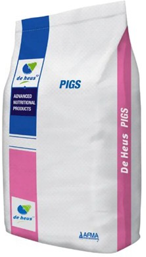
Since the WOI is such a short period, specialized nutrition is often overlooked. Even though we cannot change or improve a sows’ body condition in only 4-7 days, we can significantly improve the hormonal response after weaning. This can be done by using a flush feeding strategy, such as Porcare Maxi Flush S.
Flush feeding provides a high-energy, high-starch diet immediately after weaning. The recommended usage is approximately 15 kg over 5 days.
A flush diet works by increasing the starch and sugar intake of the sow. This will trigger insulin to peak. Insulin enhances follicle growth and accelerates the onset of oestrus, as well as supports the production of LH and FSH.
Therefore, a flush diet will stimulate oocyte development and increase follicle size and improve oestrus expression.
What does this mean for the farmer?
Implementing a flush feed after weaning can benefit producers by supporting:
Increased litter sizes (more follicles released)
Higher birthweights of piglets
Fewer days spent in mating crates
Improved overall feed intake and energy balance
Better farrowing rates
Faster return to positive energy status after lactation
A short WOI is also linked to improved sow longevity, less non-productive days and more predictable breedingcycles. Every additional day added to the WOI increases cost and reduces annual productivity.
Conclusion
The weaning-to-oestrus interval is a small window with a massive impact. Hormonal changes post-weaning, environmental conditions, stress, nutritional support, and correct insemination practices all play a role in determining how quickly and strongly the sow returns to heat. By focusing on good management and targeted nutrition strategies such as flush feeding, producers can significantly improve reproductive performance and overall herd efficiency.
For any technical and nutritional assistance, please contact your De Heus technical advisor - https://www.deheus.co.za/meet-our-team/.


