
Reducing Heat Stress and Its Effect on Egg Production in Layer Hens
Heat stress is becoming a more prevalent occurrence in layer hen operations due to increasing global temperatures. Birds in general are particularly vulnerable to heat stress because they lack sweat glands and rely on panting and behavioural changes to cool down. When environmental temperatures rise above a layer hen’s thermoneutral zone (roughly 18–25°C), their productivity can drop sharply, egg quality suffers, and mortalities can increase. Heat stress can not only affect the short-term performance of a layer hen but can also affect their performance for the rest of their lives. Early recognition and proactive management can protect flock health and maintain egg production.

Understanding Heat Stress:
Heat stress is caused by high temperature-humidity index values, which means that the thermal neutral zone of layer hens is dependent not only on temperature but on humidity as well. When humidity is high, the thermoneutral zone of layer hens decreases, meaning that lower environmental temperatures are required to prevent heat stress. High humidity negatively affects the dissipation of heat from layer hens into the surrounding air.
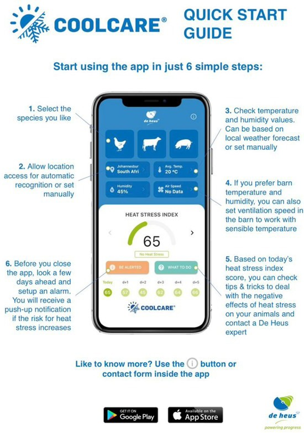
De Heus has a mobile application, CoolCare, that enables farmers to determine if their animals are experiencing heat stress by simply checking the weather in their region or manually inputting temperature and humidity levels. By understanding what environmental conditions might increase the likelihood of layer hens experiencing heat stress, farmers can be proactive in their response in order to prevent heat stress from occurring.
While extreme cases of heat stress can increase mortalities and significantly decrease egg production, at less extreme temperatures, the effects are often overlooked. When hens experience heat stress, they will start panting in response. This panting can lead to respiratory alkalosis, which can reduce the amount of calcium and carbonate that is transferred via the bloodstream to the shell gland. This causes a decrease in eggshell strength, which cannot be offset by the addition of additional calcium in the diet.
Another contributing factor to weak eggshell strength during periods of heat stress is a lower feed intake. A lower feed intake means that less essential minerals required for eggshell synthesis, such as calcium and phosphorus, are consumed and utilized by the hen. Higher percentages of cracked eggs on a layer farm can thus often be traced back to periods of heat stress.
Recognizing signs of heat stress:
When hens are experiencing heat stress, they will pant to evaporate moisture from their respiratory tract; this is often the first noticeable sign. On closer inspection, hens spread or droop their wings to increase exposed skin surface for heat loss, often crouching slightly. This behavioural change is not as effective in hens that are housed under high stocking density, as airflow between the hens is limited. During periods of heat stress, water intake dramatically increases, while appetite falls, leading to reduced nutrient intake. Due to the changes in feed and water intake, the droppings from hens may appear watery. It is important that during times where there are high environmental temperatures, sensors in the house are not only functioning correctly, but that they are also at the level where the hens are housed. Prevention of heat stress is the main goal, not treating hens for heat stress when they first show symptoms.
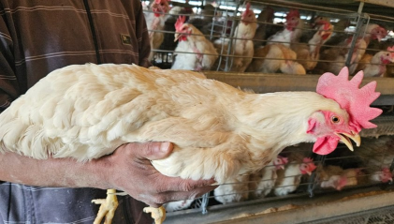
Figure 1: Hen panting
Effect on egg production:
Heat stress can negatively impact egg production, not just by reducing the number of eggs laid, but also by reducing egg size. Heat stress during critical periods of development, such as the rearing and pre-peak phases, can have a negative effect on egg production for the rest of the hen’s life. Hens that have experienced heat stress during rearing can have delayed egg production, reduced uniformity, low egg weights at the onset of egg production and can cause poor eggshell strength even after the period of heat stress has passed. While egg production decreases as a result of heat stress, the eggs that are produced can be of a smaller size with weak eggshell strength, decreasing the number of marketable eggs farmers can sell.
Prevention:
Prevention of heat stress focuses on housing, ventilation, water access, and management adjustments. It is better to act before extreme heat arrives and negatively affects production. Provide strong air movement (fans, tunnel ventilation, or natural flow) to remove excess heat and moisture from the house. In closed houses, aim for adequate exhaust capacity and consider evaporative cooling systems like foggers, misters, or cooling pads when humidity allows. Avoid adding moisture in already humid conditions. Water consumption increases significantly during periods of high temperatures, and it is therefore important to ensure plenty of clean, cool water (ideally 10 – 15°C). Water lines and drinkers should be in shaded areas and away from warm surfaces such as the roof of the layer house. Hens should also not have to compete for drinkers, with a maximum of 6 hens per water nipple.
Lowering stocking density can reduce the heat buildup and improve airflow around each hen. Where possible, use reflective roofing or insulation to minimize the heat transferred from the roof into the house. Feeding during cooler parts of the day, such as in early morning, late afternoon or evening and avoiding feeding during the warmest parts of the day can reduce metabolic heat from digestion.
Additional cooling equipment, such as misters/fans (with good airflow), can significantly reduce house temperatures and lower the chance of hens experiencing heat stress. The best preventative measure remains tracking and monitoring the temperature-humidity index, while having emergency plans in place, including backup power for ventilation equipment.
Conclusion:
With continuously increasing global temperatures, heat stress will be a common problem in layer hen systems. While conditions likely to cause heat stress, such as high temperatures and high humidity, will only become more common, proactive steps can be taken to prevent this from occurring. Early warning systems and sensors are key to not treating heat stress, but rather preventing it from occurring in the first place. By preventing heat stress from occurring, egg production can be maximized not only in the short term but also over the productive lifespan of a hen. Key focus points of preventing heat stress are removal of humid and warm air, allowing hens enough spaces so that air can move freely between the hens and management practices that don’t treat heat stress, but reduce the occurrence thereof.
Reducing heat stress and its impact on egg production in layer hens is essential for optimal performance. To learn more, contact your local De Heus Technical Advisor - https://www.deheus.co.za/meet-our-team/.


