
A comparison of common laying breeds in South Africa
The three most used commercial laying breeds in South Africa are the Hy-Line, Lohmann and Amberlink layers. Looking at different production systems, the preferred choice of breed seems to be based on personal preference from farm to farm. Commonly, you will hear that the farmer has either always farmed with that breed and they have a trusted pullet supplier who supplies the breed they prefer, or they prefer the breed due to a specific trait, such as environmental adaptability

With layer genetics having advanced over the years, this article will investigate the differences between these three modern breeds and what factors would influence a farmer to choose one breed over another. The observations in this article are based on the breed standards for each breed.
Breed history and appearance:
Within all three breeds, you find a brown and white/silver feather colour variant. As seen below (Figure 1), in overall physical appearance, the breeds are very similar when comparing the respective white and brown lines. Small variations can be seen in face and body shape, but these can be difficult to differentiate even when looking at the breeds side by side.
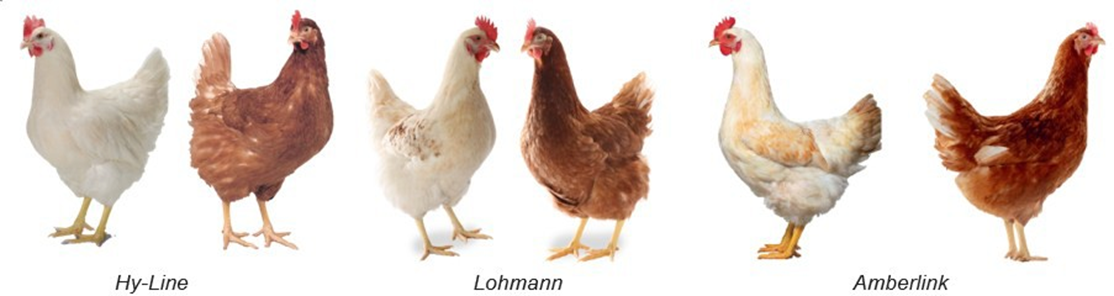
Figure 1: Visual appearances of the three modern breeds
The Hy-Line breed was originally developed in America in 1936 and came from crossing breeds such as the Rhode Island Red, New Hampshire, Leghorn, and Light Sussex. This breed was bred with the goal of high egg production.
The Lohmann breed is a newer breed, first developed in Germany in the 1980’s by crossing the Rhode Island Red with White Rock breeds. Again, the goal was to produce a breed capable of high egg production with an added emphasis on good shell quality. The DeKalb or Amberlink layer breed was developed in America in the 1940’s and the breed was launched in the 1980’s. The breed was designed to have good laying persistence using the Leghorn breed as one of the base breeds.
When comparing the breed size by weight at point of lay (Graph 1), on average, the Lohmann breed is slightly lighter than the Hy-Line and Amberlink breeds. However, at the end of production, the breeds all have a similar weight just above 2000 g. Within the different breeds, the brown line of the Hy-Line and Amberlink has a heavier target weight at point of lay compared to the silver, but is lighter at the end of production. The opposite is true for the Lohmann breed.
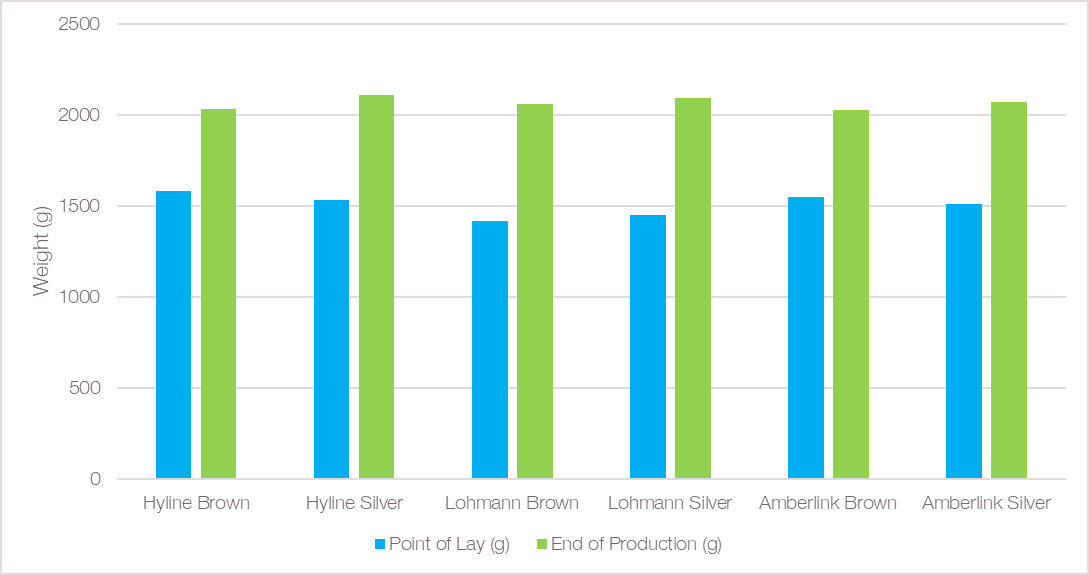
Graph 1: Breed body weights at the point of lay and end of production
Housing, environment and liveability:
Both the Hy-Line and the Lohmann breeds have been developed globally across a range of environments, but tend to produce better in cage or barn systems. The Hy-Line is known as a versatile breed and can be found in hot, tropical climates as well as cold climates. The Hy-Line breed can be more sensitive to heat when compared to the Amberlink. It is noted that the Lohmann tends to perform better in moderate climates and well-managed housing systems, although this breed can be sensitive to ventilation. While the Amberlink was not specifically bred for any specific climate, it has been described as a hardy bird with good adaptability. A highlight of the Amberlink breed is good feather retention, which could make this breed more well-suited to outdoor/free-range production systems where birds are exposed to the elements. Improved feathering is likely to help the birds tolerate both cold and heat stress better. This can also lead to better cull prices in countries such as South Africa, where there is a live cull market.
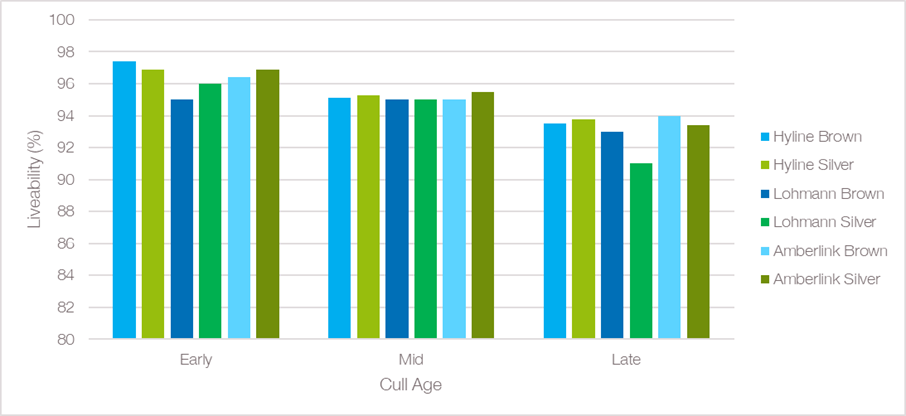
Graph 2: Average cumulative liveability at an early, mid and late cull age per breed
The average cumulative liveability (Graph 2) is similar across all breeds when culled at an early age (around 60 weeks). Here, the liveability ranges from 95 % (Lohmann Brown) to 97.4 % (Hy-Line Brown). Again, when looking at the mid-cull age (80 weeks), the breeds have a similar liveability of around 95 %. At the late cull age (90+ weeks), the Lohmann Silver has a noticeably reduced liveability at 91 % while the Amberlink Brown has the highest liveability at 94 %; however, even here, the breeds are closely clustered. Ultimately, liveability will be primarily dependent on farm management and environmental factors.
Egg conformation:
In South Africa, all three breeds are described as producing attractive brown eggshells. The average strength of the eggshells from the three breeds is similar at around 40 N. There are some differences in egg weight (Graph 3) between the breeds and breed lines. At the point of lay, the Amberlink Brown lays the lightest egg at 38.6 g while the Hy-Line Silver lays the heaviest egg at 47.2 g. For the Hy-Line, there is not much difference in egg weight between the brown and silver line, according to breed standards. For the Lohmann breed, the brown line lays a noticeably heavier egg (45 g) at point of lay compared to the silver (41.5 g). The opposite is true for the Amberlink breed, where the silver line lays a heavier egg (43.3 g) compared to the brown (38.6 g). When considering egg weight at the end of production (100 weeks of age), the Hy-Line and Lohmann breeds have similar average egg weights ranging from 63.8 g to 65.5 g, while the Amberlink breeds lay slightly lighter eggs (61.2 g for the brown, 59.6 g for the silver).
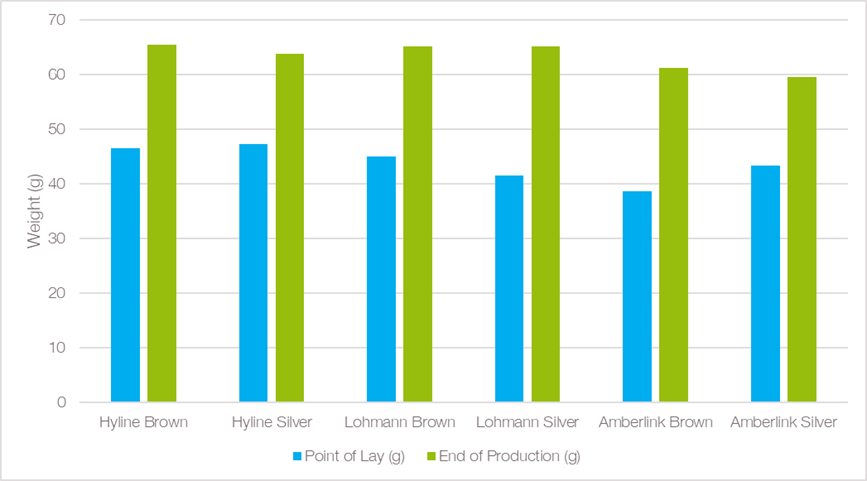
Graph 3: Breed egg weights at point of lay and end of production
Egg production:
The peak production across the three breeds is similar, ranging from 95% (Lohmann Silver) to 98% (Hy-Line Silver). It is important to remember that these breed standards are the peaks achievable in environmentally controlled conditions and will vary between production systems and be affected by management and environmental conditions. When looking at the breed lines, the silver lines of the Hy-Line and Amberlink peak slightly higher than their brown lines, while the opposite is true for the Lohmann.
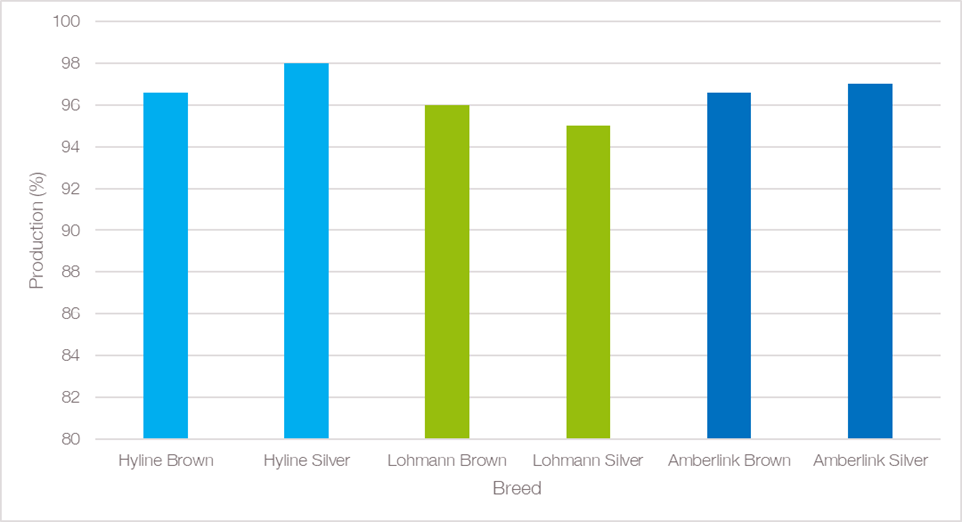
Graph 4: Peak production per breed
A good indicator of production potential (with good rearing practices) is the age at which 50% of the laying population is in lay. The sooner a flock comes into lay, the sooner they begin generating income. While achieving 50% production at a younger age is desirable, it is not advised to try and achieve this through earlier light stimulation. Stimulating layers too early or when they are not at the desired body weight can lead to increased mortalities, complications such as prolapses, and poorer production later in life.
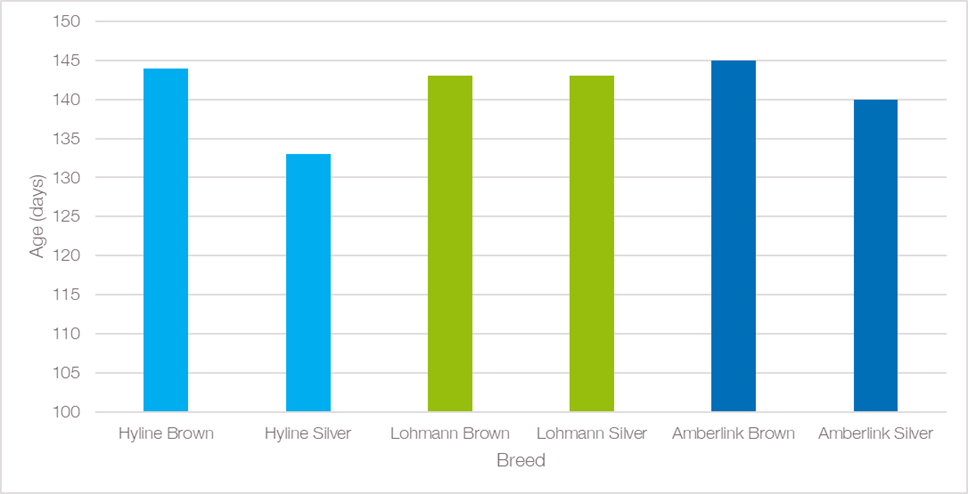
Graph 5: Age at which the flock reaches 50% production per breed.
The Hy-Line Silver can reach 50% production (Graph 5) earlier than the other breeds (133 days). The Amberlink Silver reaches 50% production at 140 days, slightly earlier than the remaining breeds (between 143 and 145 days).
The production percentage at 100 weeks (Graph 6 below) indicates the persistence of lay and at what age you should consider culling your flock. The optimum culling age changes depending on the egg price, the demand for eggs and the cull price. Producers may choose to cull earlier or later depending on what is more profitable for their system. The Lohmann breed, in general, has a lower production percentage at 100 weeks of age compared to the other breeds. This suggests that it may be better to cull the Lohmann breed earlier. The Hy-Line has a production of 70% at 100 weeks of age, and the Amberlink of 77%, which suggests that these breeds could be kept for longer and culled at an older age, depending on the market.
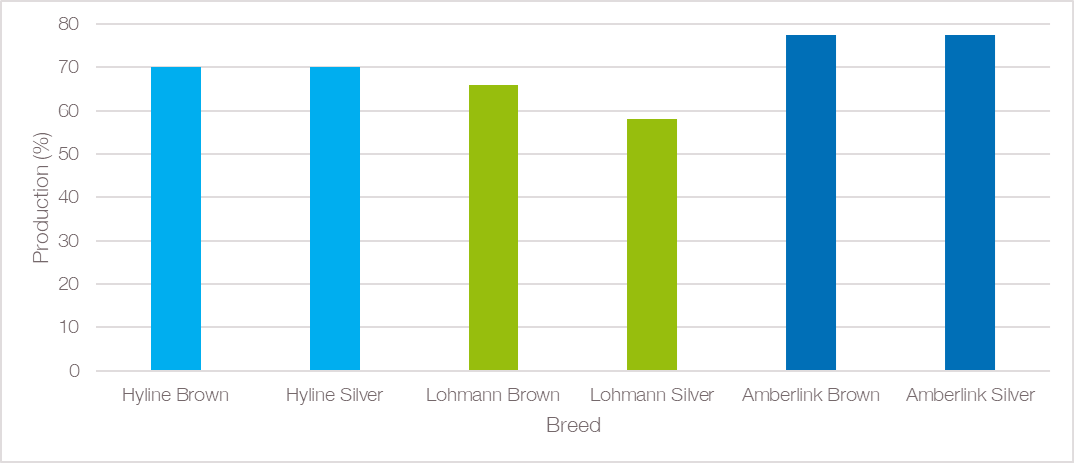
Graph 6: Production percentage at 100 weeks of age per breed
Feed and feed efficiency:
The Hy-Line breed appears to have a lower intake when compared to the other breeds (Graph 7). It must be noted that feed intake can be affected by many factors such as climate, feed delivery system, feed trough fill, frequency of feeding and stocking density.
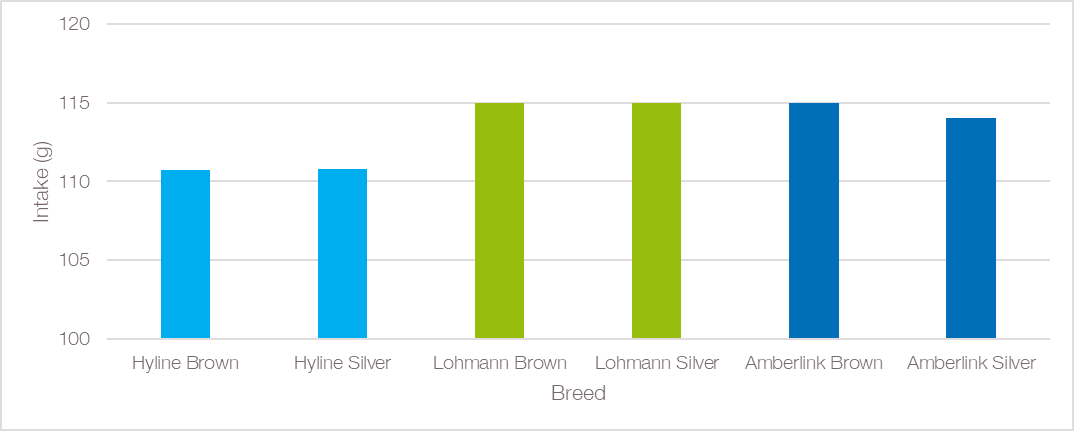
Graph 7: Average daily feed intake per bird per breed
Looking at the feed conversion ratio (FCR), the amount of feed in kilograms required to produce one kilogram of egg mass, all breeds perform similarly (Graph 8 below). The Hy-Line breed has a slightly improved FCR compared to the other breeds, but only differs by a maximum of 0.16. Again, it is important to consider that a wide range of factors may influence FCR and that these figures are guidelines. When considering production systems, it is more likely that management and nutrition would have a greater effect on FCR than genetics.
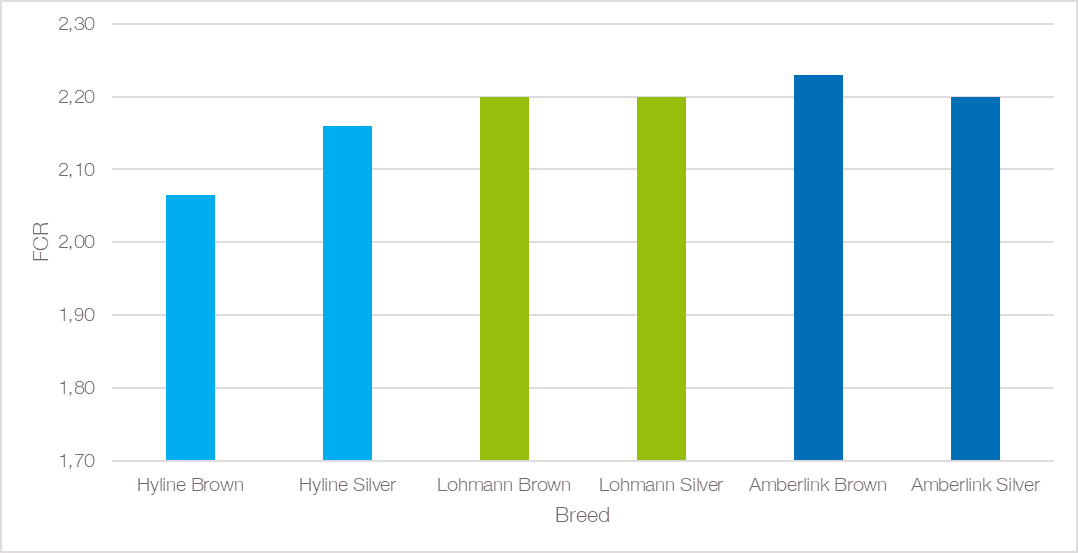
Graph 8: Average feed conversion ratio (FCR) per breed
Conclusion:
Overall, all three commercial laying breeds, the Hy-Line, Lohmann and Amberlink, are all relatively similar when considering appearance, housing options, environment adaptation and liveability, egg conformation and production, as well as feed intake and feed efficiency. Small differences can be seen between the breeds and breed lines, such as the Amberlink being well-suited to free-range systems or that the Hy-Line Silver reaches 50% production marginally sooner than other breeds.
In terms of egg conformation, the main difference is in the egg weight at the point of lay. This may be heavily influenced by body weight at 16 weeks and the point of lay. Another difference is in the production at 100 weeks of age, which suggests that different breeds should be culled at different ages. Notably, the Lohmann breed could work better in a system where birds are culled earlier. In laying operations in South Africa, most producers tend to cull between 80 and 90 weeks of age.
Breed choice and breed line choice appear to be a personal choice, especially when modern genetics comes into play. Arguably, it is most likely the on-farm management, nutrition and environmental conditions that have the biggest effects on production rather than the choice of breed, especially during the rearing period. As seen, all breeds have the genetic potential to produce very well if managed correctly.
Should you require more information relating to the common laying breeds in South Africa, please contact your nearest De Heus Technical Specialist - https://www.deheus.co.za/meet-our-team/.


