
Healthy cows, higher butterfat: How KEP makes a difference
Butterfat, alongside milk yield, is one of the key indicators monitored to assess both milk quality and the health status of the cow. When butterfat levels decline, the cause can often be linked to environmental, management, or nutritional factors. As nutrition accounts for approximately 40% of the variation in milk fat production, De Heus has developed a new nutritional concept known as Ketogenic Potential (KEP) to help support stable and healthy butterfat levels.

The Ketogenic Potential (KEP) is an index that helps predict the change in butterfat on farm
KEP is based on extensive research into key ration components that influence milk fat synthesis. It considers their availability in feed ingredients and roughage. Farmers can expect more accurate forecasts of butterfat changes after adjusting nutrition for the cows on their farm when using KEP. When at risk of dropping below a certain minimum butterfat, rations can be adjusted with an increased KEP value, for example, by including molasses and/or beet/citrus pulp. This helps to maintain more consistent butterfat results over time.
A large number of feed components were analysed to determine their KEP values
In order to make this new nutrient available for our dairy farmers everywhere, KEP values were determined for different roughage sources, raw materials, by-products and concentrates. By analysing data from all over the world, we can predict the impact of changes in ration composition on butterfat. Furthermore, we can make predictions based on differences in roughage quality seen in pastures or silages.
At De Heus, we conducted an extensive research program determining the relationship between KEP and milk fat response on farm. One of the most important determining factors being the levels of different long-chain fatty acids (LCFA). For all forages LCFA levels (including C16:0 and weighted unsaturated fatty acids (w)UFA) are now calculated and converted into a KEP value to be used in our ration calculations.
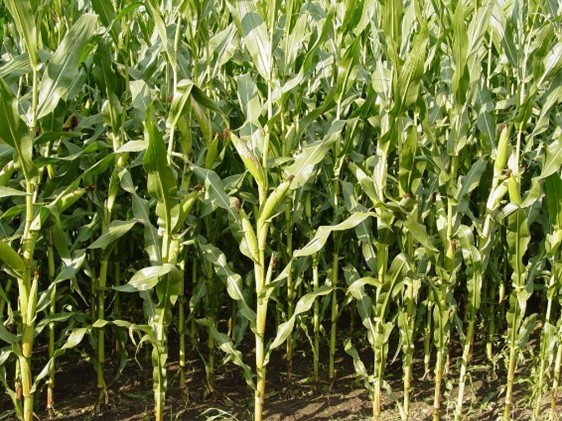
Starch is another important factor, for example maize silage can vary considerably in nutritional feed value. In the example below, over 4000 analyses show how the KEP value changes with starch levels in maize silage. Starch content in the maize silage is important for the energy value and is related to the proportion of kernel compared to leaf. After considering starch is important to consider the maize kernel itself, since it also contains unsaturated fatty acids, and both nutrients decrease the KEP value and can decrease milk fat content.
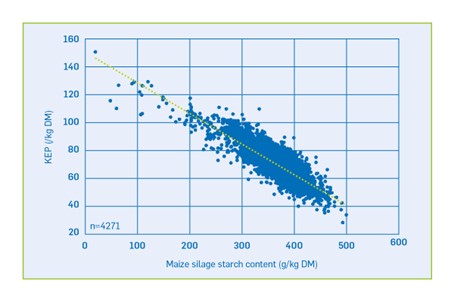
Ketogenic potential (KEP) of maize silage related to the starch content of the maize silage
How it works:
During a farm visit, we check for factors that may influence milk fat production. After analysing the roughages and the available raw materials, we establish the KEP nutrient level for each and determine our advice to either keep butterfat constant or aim for specific target levels based on the farmers requirements.
FeedExpert is our on-farm ration formulation tool (Insert link to FeedExpert) which enables us to optimize the ration towards the desired milk fat change. The extensive analyses, which forms the basis of the KEP value, ensures the highest levels of predictability and reliability in the industry leading to clear actions to keep a stable production of milk fat and secure cow health. This means you can manage your butterfat by adjusting your dairy cow ration when required. After all, a healthy cow produces more milk with a consistent level of milk butterfat. Now that is Powering Progress.


Want to know more?
Find out how we support our farmers in many places to manage their milk fat.


